When temporary construction site drains stop flowing, the construction manager should identify the affected drainage run, check for evidence of silt or construction debris, establish where the water is intended to discharge and record which work areas are affected. These details establish the scope of the problem before clearance is arranged.
Temporary site drainage can change during groundworks as excavation boundaries, access routes and working levels move. A restriction may therefore involve a drainage arrangement that differs from the original site plan.
Identify which temporary drainage run has failed
Begin by locating the point where water is accumulating. This might be a temporary gully, collection channel, sump, pipe connection or surface drainage route beside an excavation.
Record the work zone and describe the observed failure. Is water collecting because the receiving pipe is not draining, because a channel is obstructed, or because incoming water exceeds what the temporary arrangement can accommodate?
Check the latest site drainage drawing against the arrangement currently in use. A newly installed crossing, diverted run or temporary connection may not appear on an earlier drawing.
Useful information includes:
- The affected work zone, compound or excavation reference.
- The drainage inlet, channel, sump or pipe involved.
- Whether the problem is continuous or follows rainfall or a particular site activity.
- Whether nearby drainage sections are operating normally.
- Any recent changes to ground levels, temporary connections or access routes.
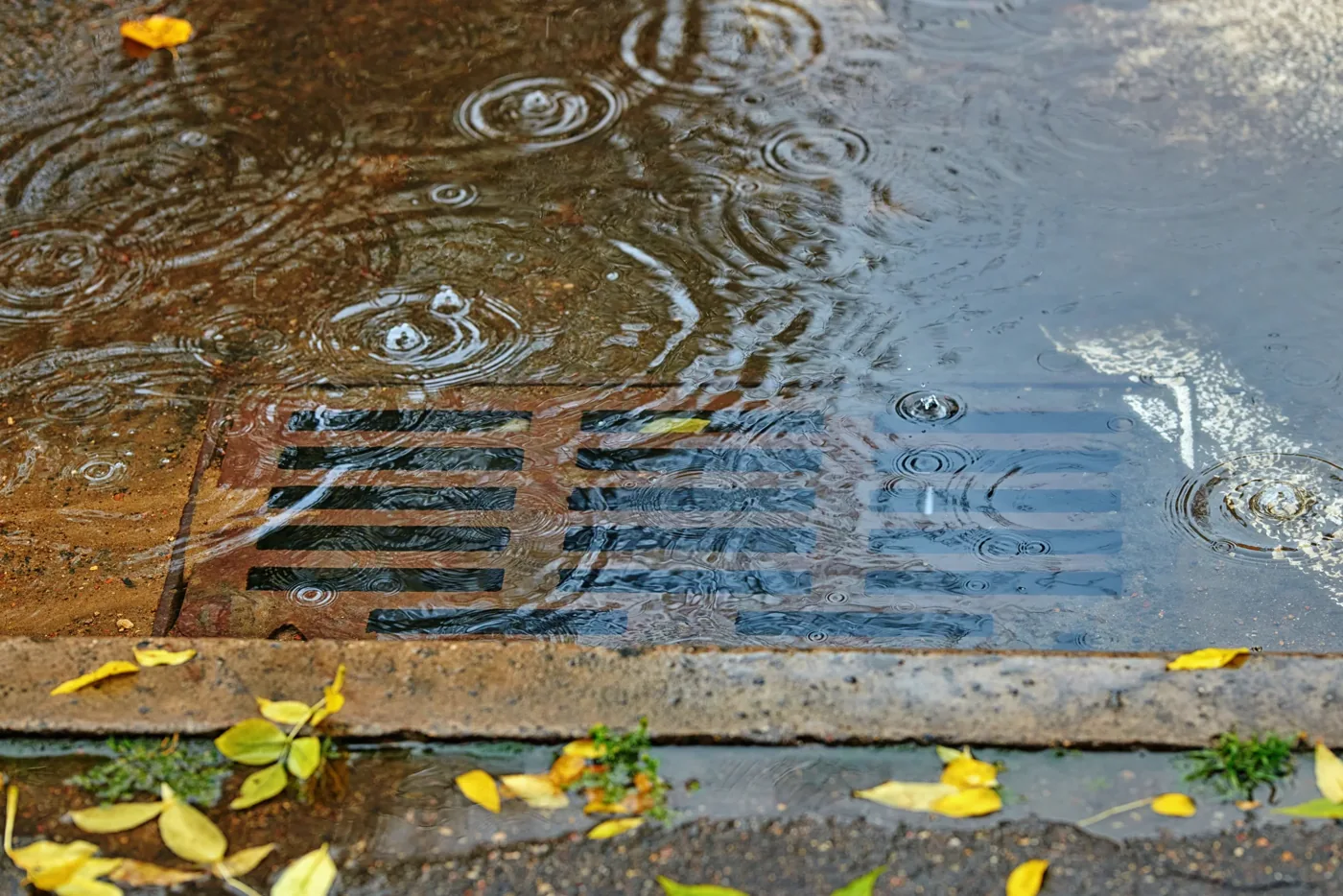
This distinction is important because standing water alone does not prove that a pipe is blocked. Rainfall, groundwater entering an excavation or inflow exceeding the temporary system’s capacity can also cause accumulation. Compare the incoming water with the intended drainage route before deciding whether a restriction needs clearing or the temporary drainage arrangements need reviewing.
Record sediment, debris and receiving drain information
Silt accumulation is a common consideration where drainage serves exposed ground, stockpiles or active excavations. Fine material carried by runoff can settle in slower-flowing sections and progressively reduce capacity.
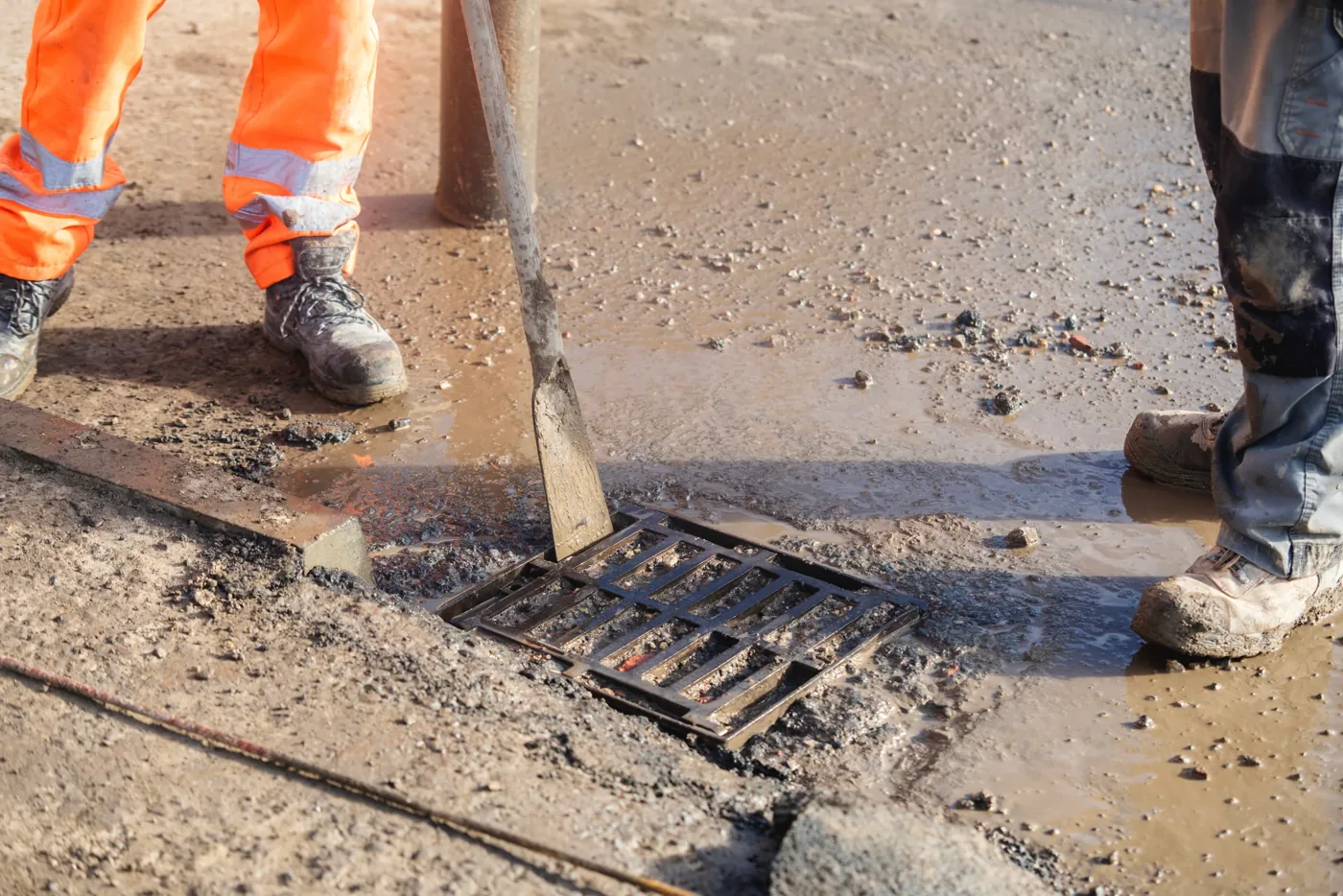
Construction debris may create a more localised obstruction. Record any visible soil, aggregate, packaging, mortar residue or other material near accessible drainage inlets. Describe observations without assuming that the same material is present inside the pipe.
Next, establish the drainage discharge route. Temporary site drainage may connect to a controlled collection system, an existing foul or surface water network, or another approved receiving arrangement. These destinations are not interchangeable.
For construction activities in England, the Environment Agency’s pollution prevention guidance explains the importance of keeping contaminated water out of surface water drainage and appropriately managing runoff from excavations.
In particular, a blocked run containing silt or contaminated water should not simply be flushed into a surface water drain or watercourse. The intended discharge point and the material requiring removal need to be understood before choosing a clearance approach.
Compare the site’s drainage drawings with current conditions, identifying any settlement arrangements or points where the route changes. If the receiving system is unknown, record that uncertainty rather than treating the nearest available drain as a suitable discharge route.
Define the clearance scope before work resumes
A useful clearance description identifies both the restricted section and the practical limits of the working area. For example, a blocked temporary run beneath an active haul route requires different access planning from a silted channel beside a fenced excavation.
Record plant movements, restricted access, excavation edges, buried-service information and whether the affected zone has been isolated from normal work activities.
Identify the person who holds the current drainage plan and can explain recent alterations. Where specialist equipment needs access, confirm whether a suitable working position is available without interfering with live construction operations.
Separate restoring flow from preventing another restriction
Following clearance, the site team should establish whether water is again reaching its intended receiving system and whether the drainage arrangement is still suitable for current groundworks.
If sediment is repeatedly entering the same section, restoring flow does not address the continuing source of material. The construction manager may need to review runoff controls, sediment collection and inspection arrangements separately from the immediate obstruction.
For the drainage intervention itself, see Drains Unblocking for Construction. Where the obstruction is associated with an outside gully, the blocked gully guide provides additional context on sediment and drainage restrictions.