Drain Unblocking for Care Homes and Healthcare Sites

A blocked drain in a care home or healthcare building can affect facilities beyond the room where it is first reported. Shared toilets, wash areas and kitchens may connect to the same downstream pipe. Effective clearance begins with identifying that connection and the facilities affected, rather than treating every slow outlet as an isolated fixture problem.

HomeDrain Unblocking for Care Homes and Healthcare Sites

Drain Unblocking for Care Homes and Healthcare Sites enquiry

A local blockage or a shared restriction?

The pattern of symptoms is useful evidence. One basin draining slowly while nearby facilities work normally suggests a different investigation from several toilets reacting together. The time of day, the fixtures in use and any previous occurrence can help define the affected section.

Building plans and chamber references help connect those observations to the drainage network. In older or extended premises, the nearest visible chamber may not serve the room concerned. Tracing the actual connection avoids assumptions based only on distance.

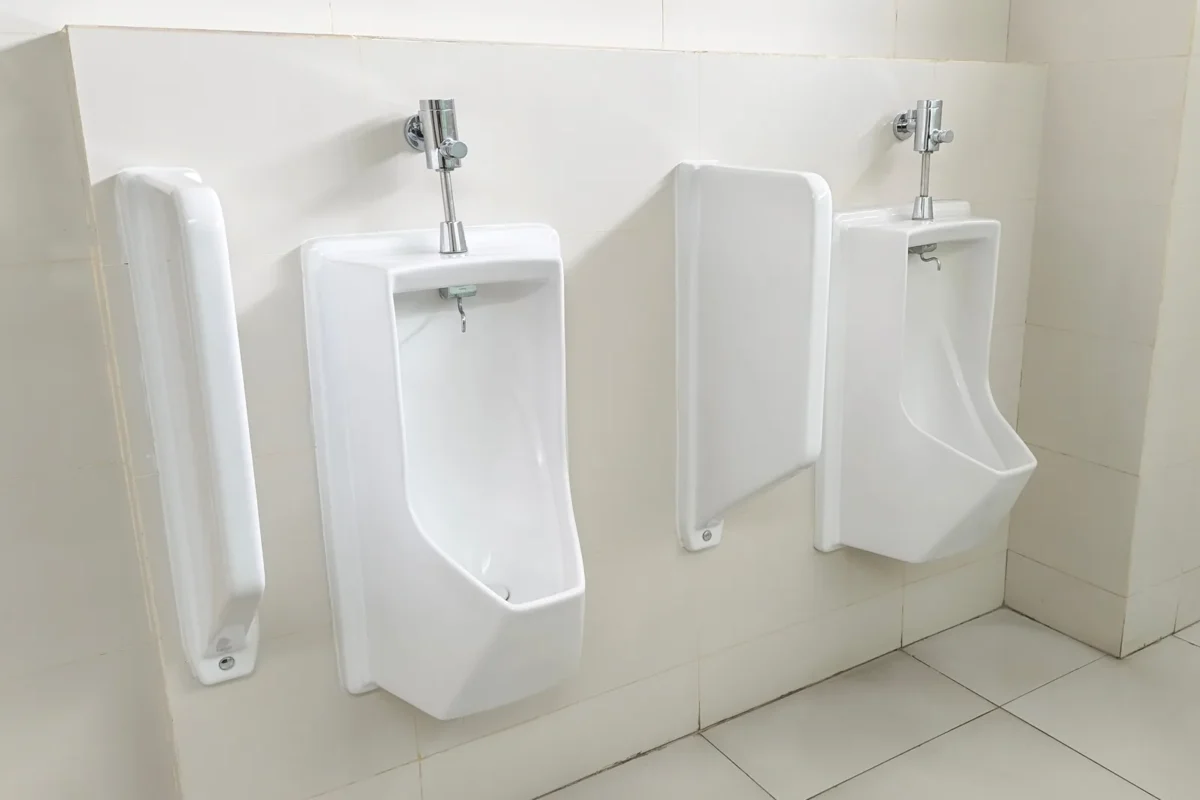
White wall-mounted urinals and flush fittings in a commercial washroom.

Essential facilities

Loss of toilets or other key drainage can make a blockage more urgent in an occupied healthcare setting.

Contaminated backflow

Sewage and open drainage need suitable separation from patients, residents, staff and visitors.

Recurring blockages

Repeated problems can justify cleaning or inspection for deposits and pipe defects.

Work around residents and essential facilities

Care homes can have residents who need assistance to move or use alternative facilities. The work area, equipment access and any temporary drainage restrictions therefore need to fit the premises’ operating arrangements. Access through an occupied corridor may be more significant than the distance from the vehicle to the drain.

The responsible site team can identify essential facilities and the arrangements for keeping people away from the work. A clearance plan also needs to account for discharge from other rooms connected to the same pipe, even if those rooms have not yet reported a problem.

Keep drainage work distinct from other hygiene tasks

A restriction inside a drain and contamination on an occupied floor are different work areas. If sewage has escaped, the specification should distinguish drain clearance from recovery and subsequent cleaning of affected surfaces.

Healthcare premises may also have specialist waste arrangements that are unrelated to ordinary foul drainage. Material encountered during the work needs to be identified in that context. The HSE health and social care guidance covers the wider workplace setting; drainage tasks still require their own site-specific planning.

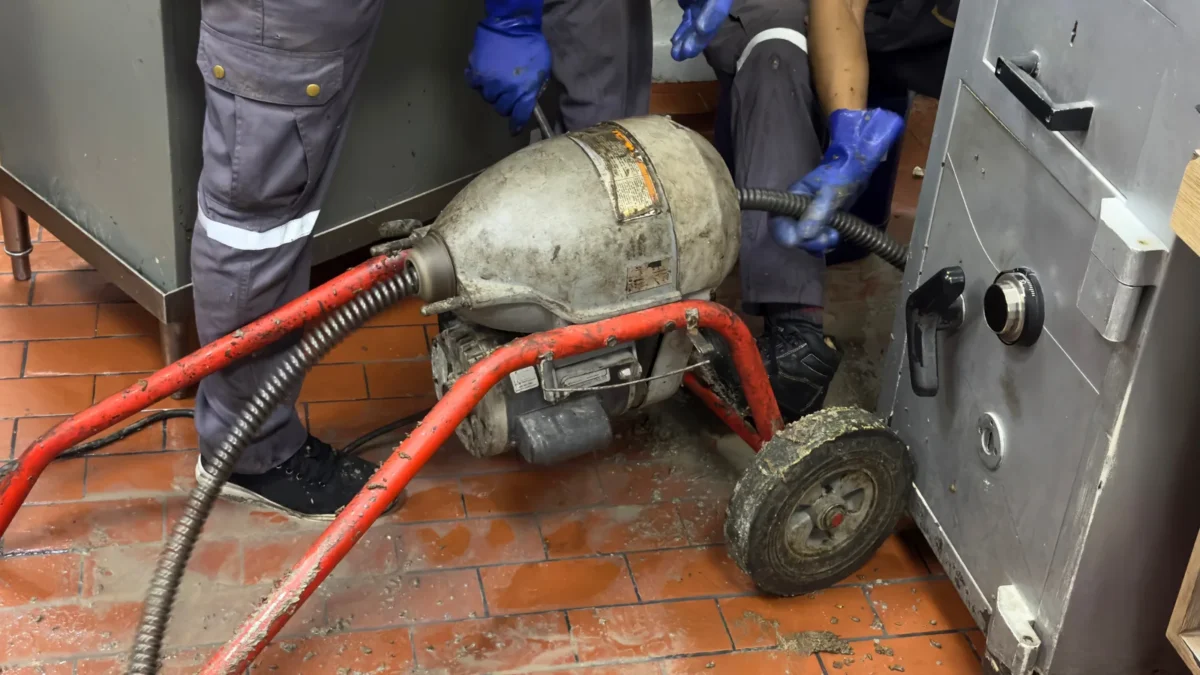
Workers operating a powered drum drain-cleaning machine on a commercial kitchen floor.

Contact us about healthcare drain unblocking

Complete the form and we will get back to you.

Choose follow-up work from the findings

Clearing an obstruction may restore flow without showing why it formed. A recurring problem at the same location can justify wider cleaning or a camera inspection, particularly where deposits, roots or damaged pipework are suspected.

The useful distinction is between the immediate obstruction and the condition of the pipe. A defect visible after cleaning may need a separate repair decision. Conversely, a repeat complaint from another room may involve the same downstream restriction rather than a new local fault.

Give the maintenance record a location

Room numbers, stack identifiers, chamber labels and the section worked on make the findings usable by the next contractor or facilities colleague. Records that say only “drain cleared” can be difficult to compare when a building has many similar outlets.

Checks after clearance should relate to the affected connections and the accessible part of the system. Any section not reached or not inspected should remain identifiable. These records support decisions about further cleaning, investigation or repair without treating a successful flow check as a survey of the whole network.

Martyn is our technical spokesperson, with particular knowledge of tank cleaning, septic tanks and drainage.

Drain Unblocking for Care Homes and Healthcare Sites: common questions

Can one blockage affect several care-home bathrooms?

Yes. Bathrooms may share a stack or downstream drain, so symptoms in different rooms can have a common cause.

Does clearance include cleaning an affected room?

Drain clearance and recovery or cleaning of escaped sewage are separate parts of a specification. Their extent should be identified individually.

What helps investigate a recurring blockage?

Location references, the fixtures affected, timing, previous clearance findings and any available inspection footage help compare successive incidents.

Drain Unblocking

Services

Request a quote

Menu

Get a quote