Yes, commercial drain clearance can sometimes take place while unaffected parts of a building remain open. Whether this is practical depends on which fixtures connect to the blocked drain, where access is required and whether wastewater can continue to discharge from occupied areas. The important distinction is between closing the entire premises and temporarily restricting the facilities or spaces directly affected by the work.
Identify which fixtures use the affected drain
Before deciding which areas can remain operational, identify the toilets, sinks, kitchens, cleaning points and other outlets connected to the affected drainage section.
In a multi-storey office, toilets on several floors may discharge into a shared soil stack. In a retail premises, separate customer and staff washrooms may connect to different branches before joining an underground drain. The visible distance between rooms does not reliably indicate whether their wastewater ultimately uses the same pipe.
The facilities manager should establish:
- Which fixtures currently show blockage symptoms.
- Which other fixtures may connect to the restricted section.
- Whether unaffected toilet facilities are available elsewhere in the building.
- Whether drainage plans identify separate branches or shared connections.
- Which occupied areas are close to the proposed access points.
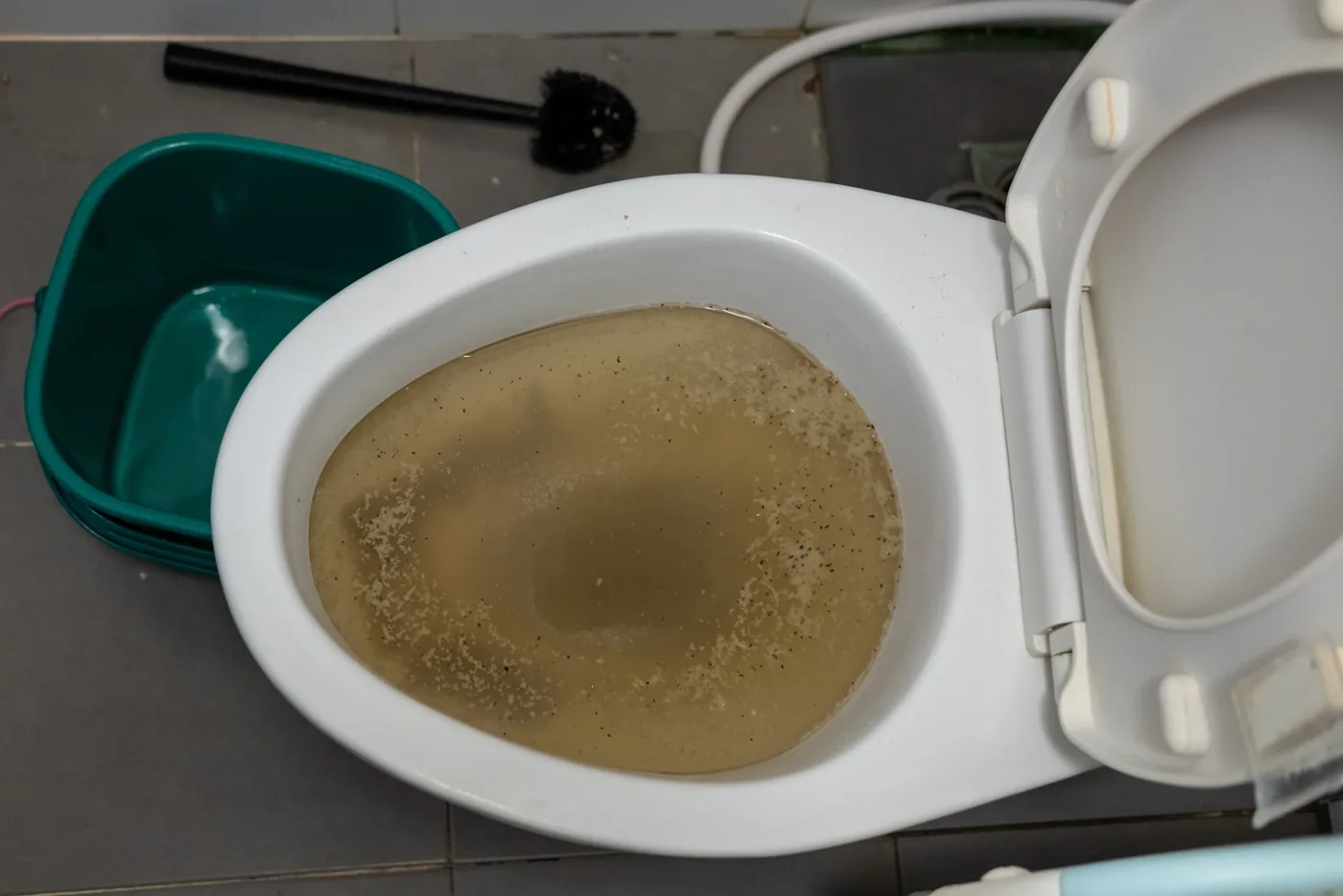
Until the connections are understood, apparently unaffected facilities should not automatically be treated as independent. Continued discharge from another floor or department could interfere with clearance or contribute to wastewater returning through a lower outlet.
Where affected toilet facilities must close, alternative workplace provision matters. The Health and Safety Executive’s workplace facilities guidance explains the requirements for suitable toilets and washing arrangements for workers.
Establish access and isolation arrangements
Commercial drainage access may involve external chambers, service yards, plant rooms, washrooms or other shared spaces. Each location presents different requirements for maintaining access through an occupied property.
For example, an external chamber in a service yard may be accessible without entering customer areas. An internal drainage point beside a busy corridor may require a clearly defined temporary work zone and changes to pedestrian movement.
Arrange building access before the work begins. Identify who can provide keys, unlock service areas, authorise temporary restrictions and communicate with occupiers. Where a building has multiple tenants, the person responsible for communal drainage may need to coordinate the arrangements.
Drainage isolation means controlling use of the connected fixtures while the affected section is being worked on. It does not necessarily require shutting off the entire building’s water supply. The necessary restrictions depend on the actual connections and the work being undertaken.
Confirm that staff and visitors can distinguish unavailable facilities from those remaining in service. Where appropriate, display temporary signs and provide directions to alternative toilets rather than allowing occupants to discover restrictions through continued use.
Agree the clearance and reopening sequence
An occupied building needs a clear sequence for the affected drainage area. The first stage is to confirm the reported problem and identify the drainage section requiring attention. The second is to agree which fixtures and spaces must be taken out of use during commercial drain clearance.
Building managers should communicate these restrictions to reception teams, cleaners, security staff and any affected tenants. A practical notice should state which facilities are unavailable, where alternatives are located and who will confirm when normal use can resume.
Once the obstruction has been addressed, the relevant connections need to be checked for normal discharge. Reopening should follow confirmation that the affected fixtures can be used without recurring backup or unexpected discharge elsewhere.
Where the restriction is associated with a shared pipe, coordinated testing is more informative than checking one isolated fixture. If further work is required, maintain the relevant restrictions until the drainage arrangement has been reassessed.
Existing building maintenance records and drainage plans can make future decisions easier. The Environment Agency’s business drainage guidance for England highlights the value of accurate drain plans and ongoing inspection.
Keeping part of a commercial building open is therefore a question of understanding connections, controlling access and verifying drainage performance. Where these conditions can be managed, unaffected areas may continue operating without imposing an unnecessary full-building closure.