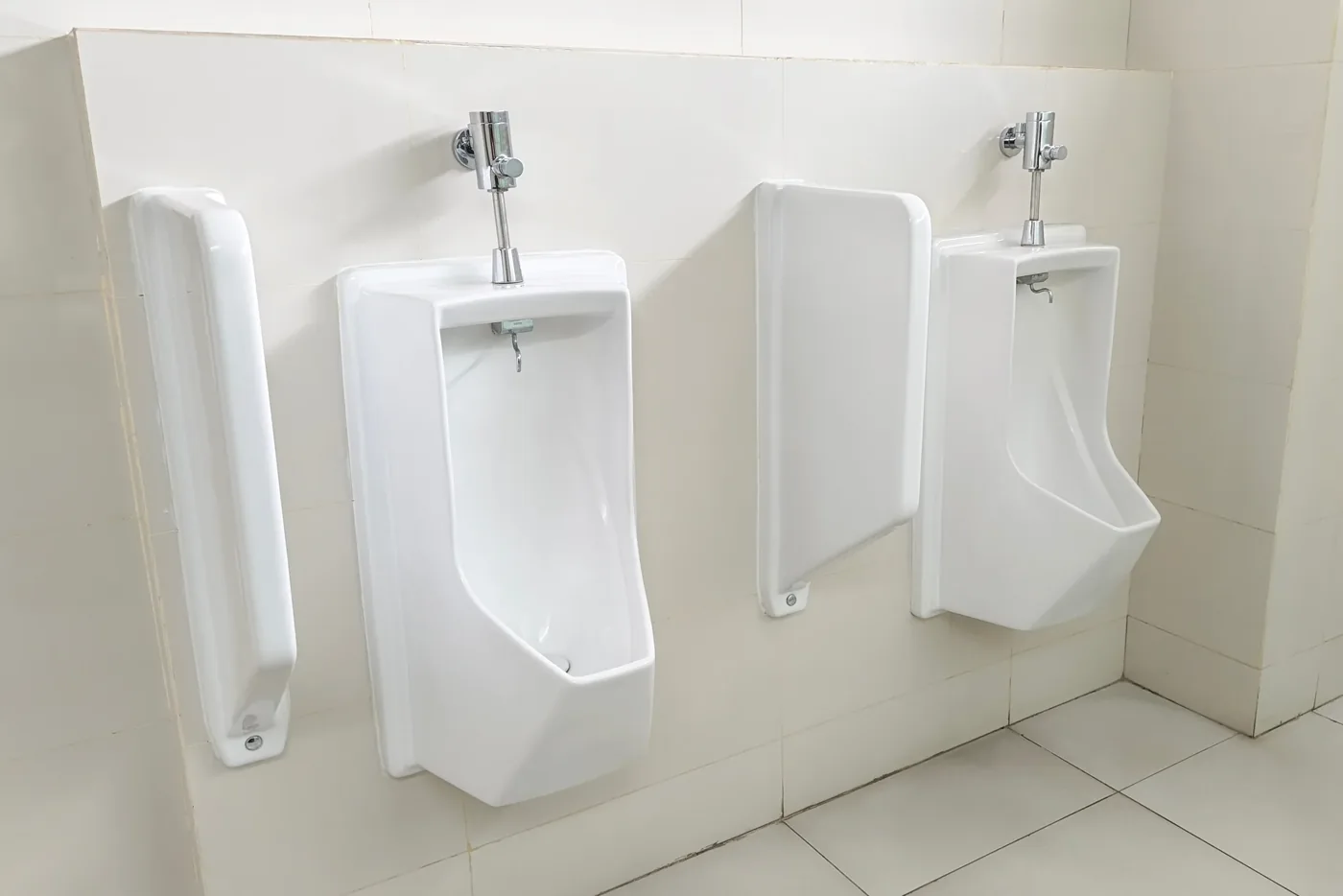
A urinal that returns to slow drainage after clearance may still have deposits restricting its waste pipe, or a separate obstruction may be affecting connected pipework. Restoring flow through one section does not necessarily remove every deposit along the drainage route.
In commercial washrooms, the distinction matters because another local clearance may restore use temporarily without resolving the condition responsible for repeated restrictions. The most useful next step is to compare how the urinal behaved before clearance, immediately afterwards and when the problem returned.
Compare the first and subsequent blockage symptoms
Establish whether the previous clearance restored normal drainage completely or merely improved a slow outlet. A urinal that never drained properly afterwards presents a different problem from one that worked normally for several weeks before deteriorating.
Review maintenance notes and ask the washroom team three specific questions:
- Did water drain freely immediately after the previous work?
- Did the restriction return gradually or appear suddenly?
- Are neighbouring urinals or other connected fixtures showing similar symptoms?
Gradually worsening flow can indicate continuing accumulation or deposits left within the pipe. A sudden repeat blockage may suggest a new obstruction, displaced material or a problem further along the drainage run. Neither pattern confirms the cause without examination.
The number of affected fixtures is particularly useful. If only one urinal is slow, its trap, outlet or individual branch may be involved. If several urinals begin draining poorly together, attention may need to move towards their shared waste connection.
Identify whether deposits extend beyond the outlet
Urinal scale deposits can form hard restrictions within traps and connected waste pipes. Other residues may also accumulate, reducing the available passage for wastewater. Their location and extent determine whether a local obstruction is the whole problem.
A previous clearance might have opened a route through accumulated material while leaving deposits attached to the pipe wall. Water can pass again, but the remaining narrowing makes another restriction more likely as additional material collects.
There is also a difference between deposits within the urinal fitting and those further along commercial washroom drainage. Cleaning a visible fitting does not establish that its concealed waste pipe is clear. Equally, repeated poor drainage should not automatically be attributed to scale when a pipe alignment, connection or other defect remains possible.
Where several fixtures connect into the same branch, record which ones are affected and which remain normal. This helps determine whether further attention should be concentrated on an individual urinal or the shared drainage route.
For general context on how local restrictions differ from wider drainage problems, the site’s blocked drains guide explains the difference between an individual affected outlet and connected fixtures.
Prepare evidence for further clearance or cleaning
A repeat urinal blockage report should include the date of the previous intervention, the condition immediately afterwards and the time taken for symptoms to return. Include any record identifying where the previous obstruction was found and which section was treated.
Useful evidence includes:
- The number and location of affected urinals.
- Whether water stands in the bowl or drains slowly after use.
- Any similar restrictions in neighbouring fixtures.
- Previous findings concerning scale, debris or connected pipework.
- Photographs and relevant maintenance records.
Ask whether the immediate objective is another local clearance or an assessment of accumulated deposits along the connected pipe. Where inspection identifies persistent deposits, cleaning may be more appropriate than repeatedly opening a narrow passage through them.
For premises in England, the Environment Agency’s pollution prevention guidance for businesses emphasises maintaining drainage and checking for blockages and leaks. Any proposed cleaning approach also needs to suit the pipework and materials actually present.
Decide what a successful intervention should establish
Record whether the relevant outlet drains normally after work and whether connected fixtures behave as expected. Where repeated restrictions remain unexplained, identifying the affected pipe section is more useful than assuming that another identical clearance will produce a lasting improvement.
The Blocked Urinal service covers the immediate drainage problem. For a recurring fault, the history of previous clearance and the pattern of returning symptoms are important parts of the assessment.