A restaurant kitchen drain that keeps blocking after cleaning may still contain deposits further along the waste line, or fresh material may be accumulating after each clearance. Restoring water flow does not necessarily mean every affected section of pipe is free from residue. The most useful next step is to compare previous incidents and identify exactly which drainage connections are repeatedly affected.
Compare the locations and timing of previous blockages
Two kitchen drainage incidents may look identical to staff while involving different parts of the system. A sink that drains slowly every week is not necessarily suffering from the same obstruction as a floor drain that occasionally backs up during a busy service.
Record the location of each reported blockage and how long the improvement lasted after cleaning. A repeat blockage history should ideally include:
- The affected sink, appliance outlet or floor drainage point.
- The date the restriction was first noticed.
- Whether drainage slowed gradually or stopped suddenly.
- Which fixtures were being used when water began backing up.
- What previous clearance work was recorded and when normal flow returned.
The interval between incidents can be particularly informative. A restriction returning immediately may suggest that a connected section remains obstructed or that another fault was not identified. A drain operating normally for several weeks before gradually slowing again may indicate continuing accumulation during ordinary kitchen use.
Keep records of unsuccessful as well as successful clearance attempts. An invoice showing that a blockage was removed is useful, but any notes identifying the affected pipe and material recovered will provide more meaningful evidence.
Identify the affected waste line and drainage use
Commercial kitchens have several drainage demands. Pot-wash sinks, preparation sinks, dishwashers, cooking equipment and floor drains may connect through different branches before joining a common line. Establishing which outlets are affected helps distinguish a local waste-pipe problem from a restriction further downstream.
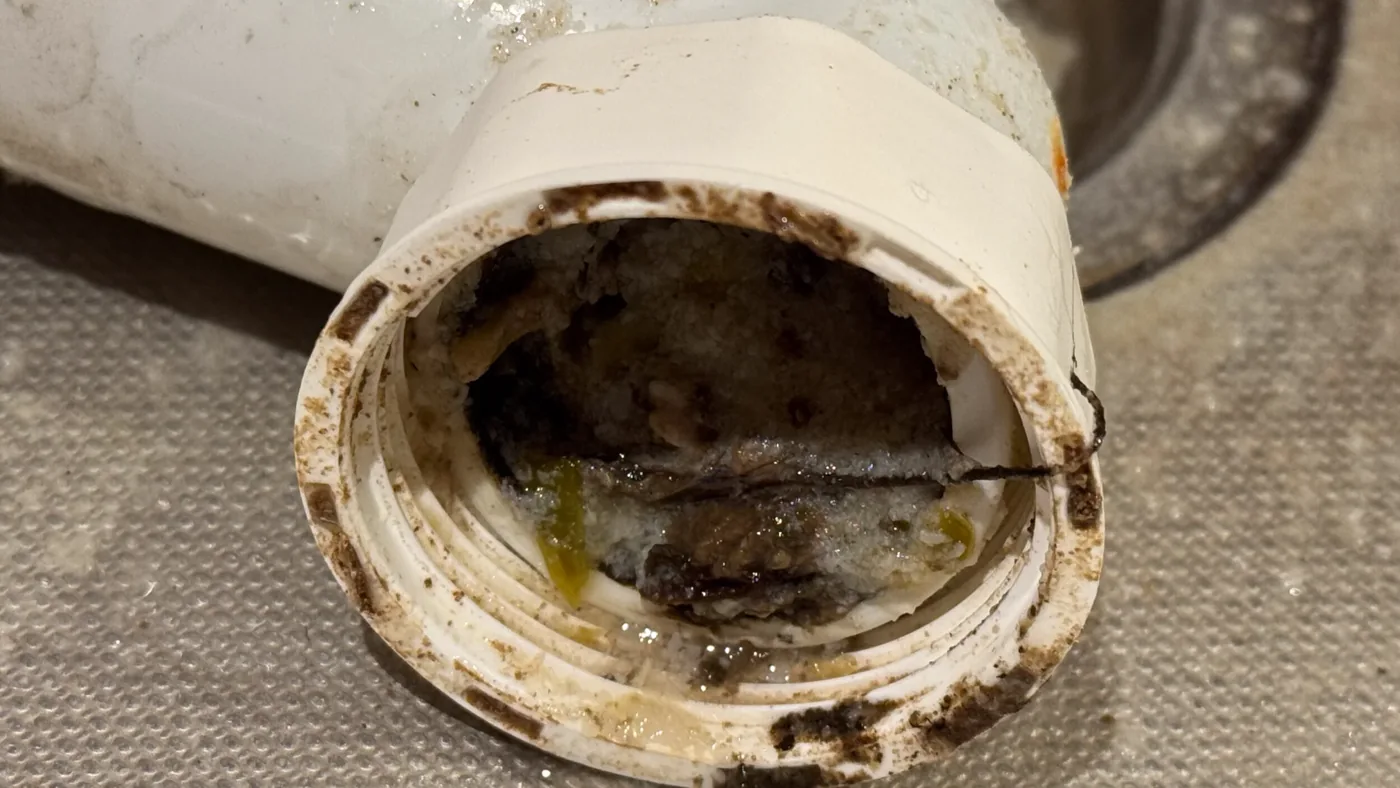
Grease deposits are a common consideration in catering drainage. Fats and oils can collect on internal pipe surfaces, particularly alongside food particles and other residues. Over time, the available passage narrows and wastewater may struggle to pass through during periods of heavier use.
The Environment Agency’s pollution prevention guidance for businesses in England explains the importance of preventing fats, oils, grease and solid material from entering drains. It also addresses suitable controls for food businesses producing greasy wastewater.
However, grease should not be assumed to be the cause of every recurring restriction. Food debris, sediment, unsuitable discarded material, changes in pipe gradient or damaged connections may produce similar symptoms.
For more detail about accumulation itself, see the kitchen fat and grease drainage guide. For a repeat failure, the additional question is why the affected line continues to lose capacity after intervention.
Decide whether cleaning or further investigation is needed
The choice between another cleaning visit and further investigation depends on what is already known about the pipe. Where previous work restored only limited flow, additional drain cleaning services may be appropriate to address remaining deposits in accessible drainage.
If the same restriction repeatedly returns despite documented cleaning, the condition and arrangement of the pipe deserve closer attention. An investigation may need to establish whether there is a persistent obstruction, a defective section or an unexpected connection contributing to the problem.
The restaurant should also review when the drainage is placed under greatest demand. For example, restrictions that become apparent during the evening wash-up may reflect the combined discharge from several appliances rather than a fault isolated to one sink.
Plan drainage work around kitchen operations, access to the affected waste line and any fixtures that will be unavailable. Review how cooking fats, oils and food solids are kept out of the drains. Environment Agency guidance recommends fat and sediment traps for restaurants producing greasy wastewater. Where such equipment is installed, record its location and maintenance history. Grease-trap servicing is a separate task from clearing a blocked waste pipe.
A useful outcome is not simply another period of free-flowing drainage. It is a clearer understanding of the affected pipe, the likely source of deposits and whether further measures are needed to reduce the frequency of future disruption.