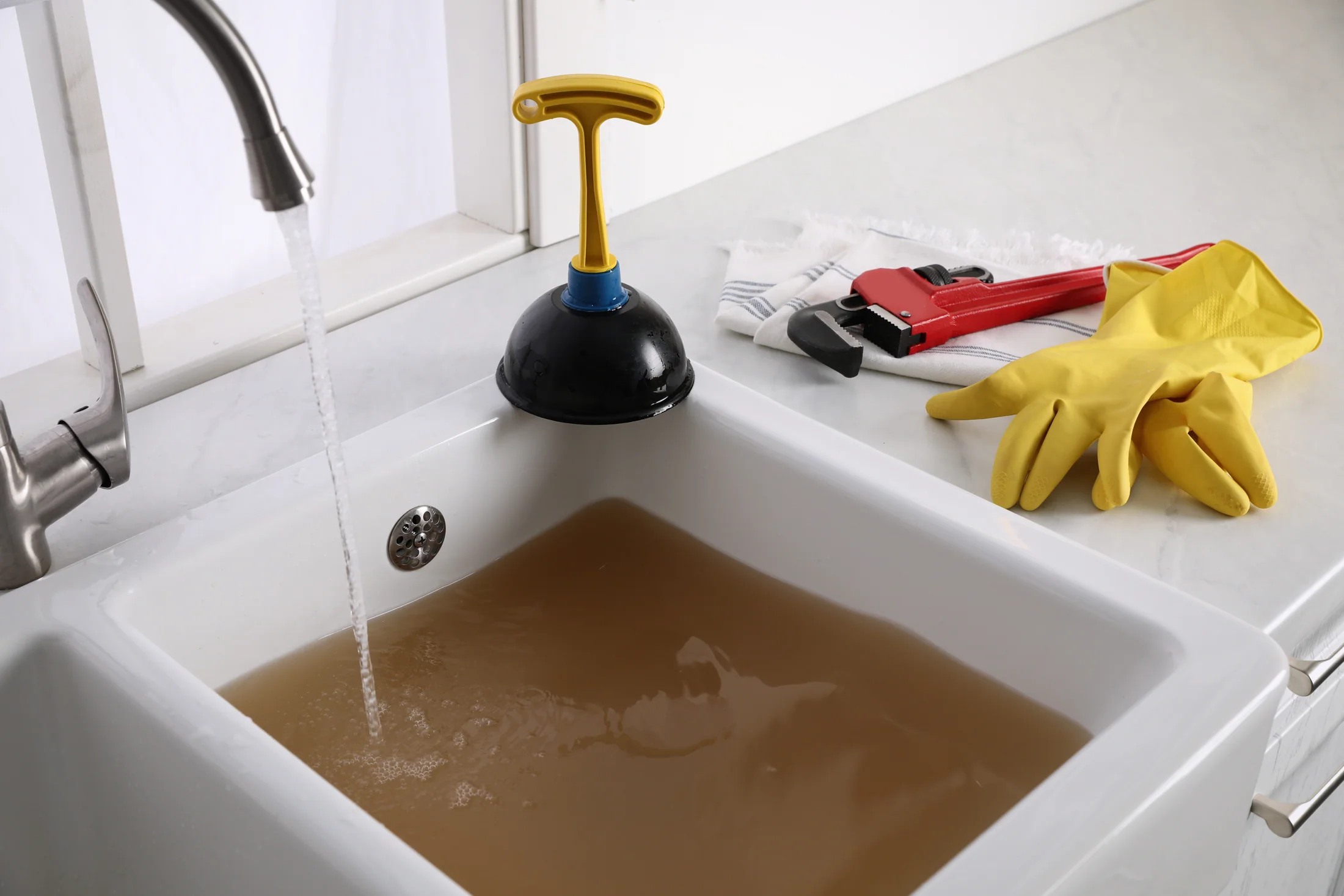
If water rises into your kitchen sink when the washing machine empties, the two outlets may share a waste pipe that cannot carry the incoming discharge freely. The washing machine pumps water out more quickly than the restricted pipe can remove it, so water can return through the connected sink waste. The restriction may be near the appliance connection, farther along the kitchen waste branch or in drainage serving several fixtures.
The useful first decision is whether this is a problem with one waste connection or a wider drainage restriction. A washing machine causing the symptoms does not automatically mean the appliance is defective, and water appearing in the sink does not establish that the obstruction is directly beneath the plughole.
Why does an appliance discharge appear in the sink?
A kitchen sink normally empties through a trap and waste pipe into the building’s drainage. A washing machine may discharge through a separate connection on the sink waste assembly or through a standpipe leading to a shared branch. The actual arrangement depends on the installation.
When the shared route is open, wastewater can leave through its intended connection. If its available passage is restricted, a washing machine discharge can temporarily exceed the amount moving away. Water may accumulate and rise towards another connected opening.
A restriction that barely affects the sink during ordinary handwashing may become obvious during an appliance’s pumped discharge. This difference in flow is an important diagnostic clue. It does not identify the material causing the restriction.
England’s Approved Document H describes traps, branch discharge pipes and their connections. For an existing problem, the actual pipe route matters more than assuming a particular standard installation.
What does the timing of the backflow tell you?
Compare three situations without deliberately repeating an active overflow:
- The sink drains normally until the washing machine pumps out. A shared waste restriction, unsuitable connection or limited discharge capacity may become apparent only under the greater flow.
- The sink drains slowly even when the washing machine is off. The trap, sink waste branch or a downstream section may already be restricting ordinary drainage.
- Water rises in the sink when several different appliances or fixtures discharge. A common section beyond the individual connections becomes more relevant to the investigation.
Also note whether water appears only during one particular part of the wash cycle. A washing machine normally pumps wastewater out during drain phases, so a connection between the timing and visible backflow is useful. It still cannot distinguish a partial obstruction from an unsuitable waste arrangement without examining the connections.
Could the kitchen trap be the problem?
Yes. The trap and connected fittings are among the possible locations for a local restriction. Food particles, grease, detergent residues and other material may reduce the passage available to wastewater. A local restriction can affect the sink itself and any appliance sharing the downstream waste assembly.
However, treating the trap as the only possible location is a mistake. Water can return through a sink even when the restriction is farther along a concealed waste pipe. Removing material immediately under the sink may therefore improve drainage without addressing the actual problem.
Our guide to kitchen fat and grease in drains explains how these deposits accumulate. That is one possible mechanism, not a confirmed explanation for every washing-machine-related backflow.
How can you distinguish a sink problem from a main drain problem?
The behaviour of other fixtures is usually more informative than the amount of water visible in the sink. A sink and washing machine that fail together, while the toilet and bathroom remain unaffected, can suggest a local kitchen branch problem. This is not conclusive because different fixtures can use separate routes before joining the main drain.
If a nearby downstairs toilet, floor drain or external wastewater point also backs up, investigation may need to extend beyond the kitchen waste connection. The same applies when water from another fixture enters the kitchen sink.
For wider symptoms, the blocked drains service guide explains the difference between isolated and connected drainage restrictions.
A drainage specialist can establish the actual route and choose an appropriate point for assessment rather than treating the visible sink as proof of the blockage location.
Should you arrange a local sink clearance or a wider investigation?
A local sink clearance may be suitable where the symptoms point towards the sink trap, appliance waste connection or immediately connected pipe. When requesting help, explain what happens in the sink when the washing machine pumps out.
A broader investigation is more appropriate when several fixtures are affected, wastewater appears at an external drain or the same backflow persists after the local waste has been cleared. Where the issue returns repeatedly, the layout and condition of connected pipework may need assessment rather than another identical local intervention.
If the appliance has recently been installed or moved, mention that change. The connection arrangement may deserve examination before anyone assumes grease or debris must be present. Equally, an installation that worked for years can develop a restriction without any alteration to the washing machine.
What information helps get the right work quoted?
When describing the problem, include:
- Whether the sink is completely blocked, slow or only backs up during washing-machine discharge.
- Whether the appliance connects beneath the sink or into a separate visible standpipe, if known.
- Whether a dishwasher, second sink or other fixture shares the affected waste route.
- Whether the problem began after installation, plumbing alterations or an earlier blockage.
- Any previous clearing work and whether it restored normal drainage.
- Whether wastewater appears anywhere outside the kitchen.
Together, these details help show whether the problem is confined to the kitchen waste or may involve a shared pipe farther downstream. They also help avoid choosing a clearance method before the affected pipework has been assessed.
What should be checked after the blockage is addressed?
Confirmation should relate to the original symptom. A sink that empties under its own flow may still back up during an appliance discharge. The completion assessment should therefore consider the affected shared connection and whether it drains as intended when the relevant fixtures operate.
Record where the restriction was found, what material was identified, which section was treated and whether the original backflow stopped. If a connection defect or inaccessible section remains unresolved, retain that distinction rather than treating restored sink flow as proof that all downstream drainage is sound.
If water is returning through the kitchen sink, request a quote for blocked sink clearance and describe the appliance discharge that triggers the problem.